A column about days gone by in Melksham by local historian Lisa Ellis
Best intentions: Children, parents, doctors
When I was about 12 and home alone, I was hungry and decided to make streaky bacon. My mother fastidiously saved bacon grease.
What I didn’t realise is that you have to cool the fat down first or it was going to burst the jar container under the intense heat, which I soon discovered when I carried the jar of filled, volcanically hot bacon grease across the room cradled by a heat-resistant pad only protecting my palms.
I can assure you that a burn is the highest form of pain there possibly could be. And when I read some of the historic newspaper articles about children and fire, I emotionally felt their pain.
“A painful incident followed a few hours later with fatal consequences occurred at Redstocks in the parish of Melksham Without, on Tuesday morning. A little girl named Violet Doris Perrett, between five and six years of age, during the temporary absence of her grandmother, with whom she lived, somehow got into contact with the fire, and before assistance could be rendered, was so severely burned that death resulted in the afternoon.” – Wiltshire Times, 16 January 1915
Violet was the daughter of Ellen (Perrett) Butler; father unknown. Ellen was living in Watson’s Court while her husband Herbert Butler was serving in the 1st Wilts Regiment. She’d last seen her daughter at Christmas. Violet’s grandmother, Mary Agnes (Brinkworth) Perrett, was severely deaf.
“Ignorant that their three-year-old daughter was being suffocated on a smouldering bed in a room above, Mr and Mrs Fred Kennelly of High Street Melksham (Wiltshire), remained downstairs until a neighbour gave the alarm. An electrical engineer, Mr F Ashworth, whose premises are at the back of the home of the dead girl’s parents, smelt something burning and saw smoke coming from the window of the child’s bedroom. Investigation revealed that the child, Mary, was on the bed beyond air, with the bed clothes almost completely smouldered away. It is thought that the child had been playing with matches, as there was no light in the room.” – Western Daily Press, Thursday, 14 August 1930
“It appears that on the morning of the 3rd January last, the deceased had risen and lighted the fire in her father’s house about seven o’clock, and she was blowing it to make the kettle boil, when a spark jumped out and ignited her dress, and she was soon in flames. Her screams brought her father and mother to her assistance, and they succeeded in extinguishing the flames, but not before she was dreadfully burnt.” – Wiltshire Independent, Thursday, 26 March 1863
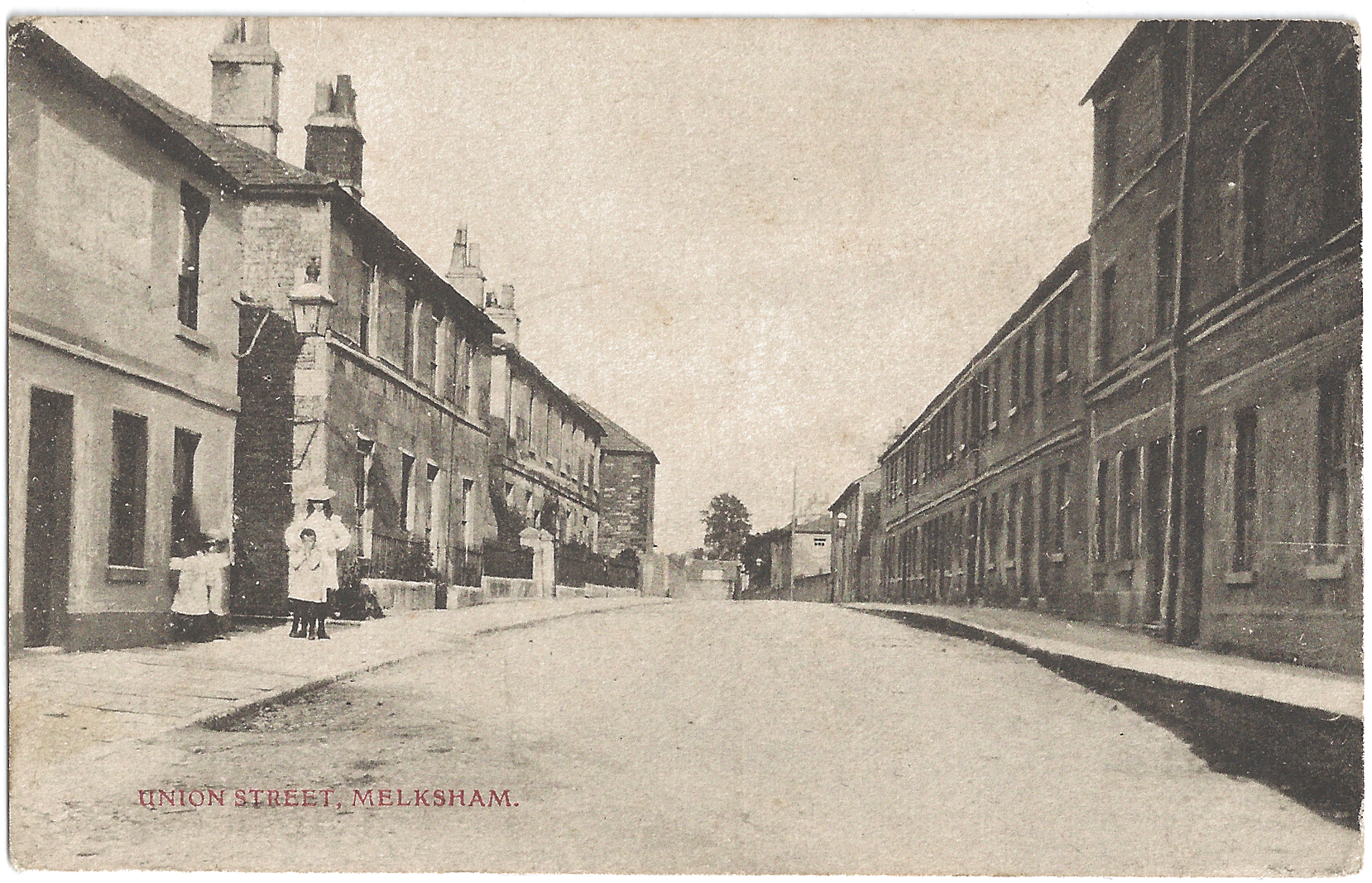
Augusta Butler lived on Union Street with her father Thomas Goodman Butler, a court bailiff, locksmith and Melksham’s town crier, and stepmother Orphia Louisa (Mead) Butler.
She was baptised 25 days following the accident. After two months under the care of Dr George Plimmer of Church Street, her case was deemed hopeless and she was sent to Bath Hospital, dying two weeks later. She was 12 years old.
This was not the first case of a child’s death under the well-intentioned care of a physician. In the 1871 death of Harriet Maria Fowler, the nine-year-old daughter of MP Robert Fowler. Dr Edward Meeres of Place Road was treating the deceased for ringworm, which later turned out to have slowly poisoned her over time.
Of course, those were different times. And doctors meant well. Parents did too.
An advert in an 1869 edition of the Devizes Gazette offered advice to mothers: “Are you broken your rest by a sick child, suffering with the pain of cutting teeth; go at once to a chemist and get a bottle of Mrs Winslow’s Soothing Syrup. It will relieve the poor sufferer immediately; it is perfectly harmless; it produces natural quiet sleep, by relieving the child from pain, and the little cherub awakes ‘as bright as a button’. No mother should be without it.” It was also advertised for allaying all pain, regulating bowels and the best-known remedy for dysentery and diarrhoea.
At the time, the concoction was lauded. An early work by composer Edward Elgar in 1879, Harmony Music, contained a part made for a wind quintet titled “Mrs Winslow’s Soothing Syrup”.
However…
The elixir contained morphine and in 1911, Mrs. Winslow’s Soothing Syrup was incriminated in a publication titled “Nostrums and Quackery” which contained a section called “Baby Killers”. Nevertheless, the product was not withdrawn from sale until 1930.
Support Local News
Help us keep your community connected and informed.
Local news is under pressure more than ever. For just £2 a month, you can support independent reporting that shares local stories, investigates the issues that affect you, and keeps residents up to date.
Choose a monthly subscription or a one-off donation. All donations will be reinvested into producing local journalism for Melksham.
Donate Now