

A column about days gone by in Melksham by local historian Lisa Ellis
Using genetic genealogy to answer family mysteries
Withj the ever-increasing sophistication of deoxyribonucleic acid (DNA) technology, building your family tree has turned from gumshoe detective work to scientific interpretation.
Where I once studied documents, maps, wills, photographs and even family rumours, I am now looking at and being totally confounded by centimorgans and DNA matches.
A centimorgan (cM) is a unit of genetic measurement. It’s what experts use to describe how much DNA and the length of specific segments of DNA you share with your relatives.
Truthfully, that’s a bit above my pay grade.
And it’s not something I have gotten into with Melksham’s history because I’m not originally from these parts; in fact, almost all of my family line left England and Wales in the 1500s and 1600s. Submitting my DNA to find Melksham relatives would be fruitless.
But I thought a quick summary of what I did with my family may encourage you to find your own family, if you have an interest in doing so, or a mystery to solve.
The secret is to look at your cousins. And I don’t mean solely the children of your aunt and uncle.
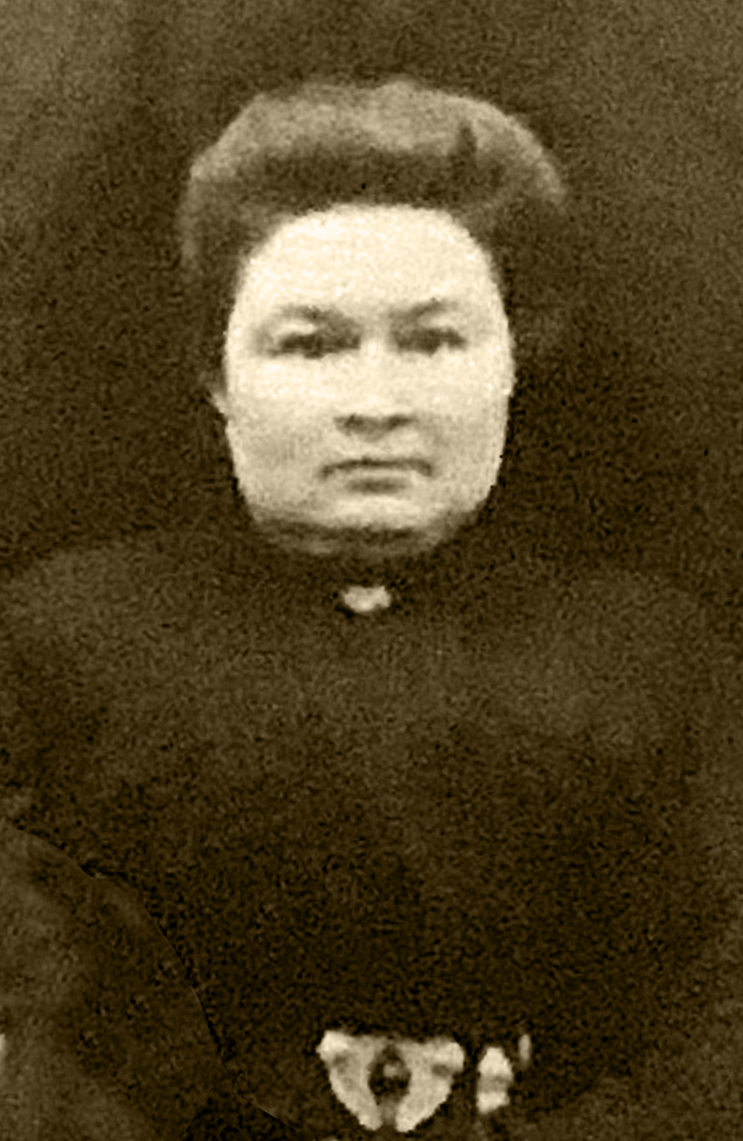
All my life, and my father’s life, and his father’s life, our family was told that my great-grandmother Sadie was Native American. She was kidnapped at age three from an Indian tribe and raised as white. This was proved by her accessory choices (see her belt in the photo) and by her actions (sleeping outside, never in a bed, making howling sounds). The practice of removing Indigenous children and putting them in white schools was predominant in the 1800s in middle America. So far widely spread was this family story that present-day relatives I am barely linked to had been told the same thing.
The problem with trying to find her origins is the low turnout of Native Americans offering their DNA to genealogy sites, such as Ancestry. So, I wasn’t surprised that I couldn’t find an indigenous trait in my own DNA analysis. I figured that the best way to prove this rumour was true was to be unsuccessful in locating any direct link to her parents after searching through 100s of possibles.
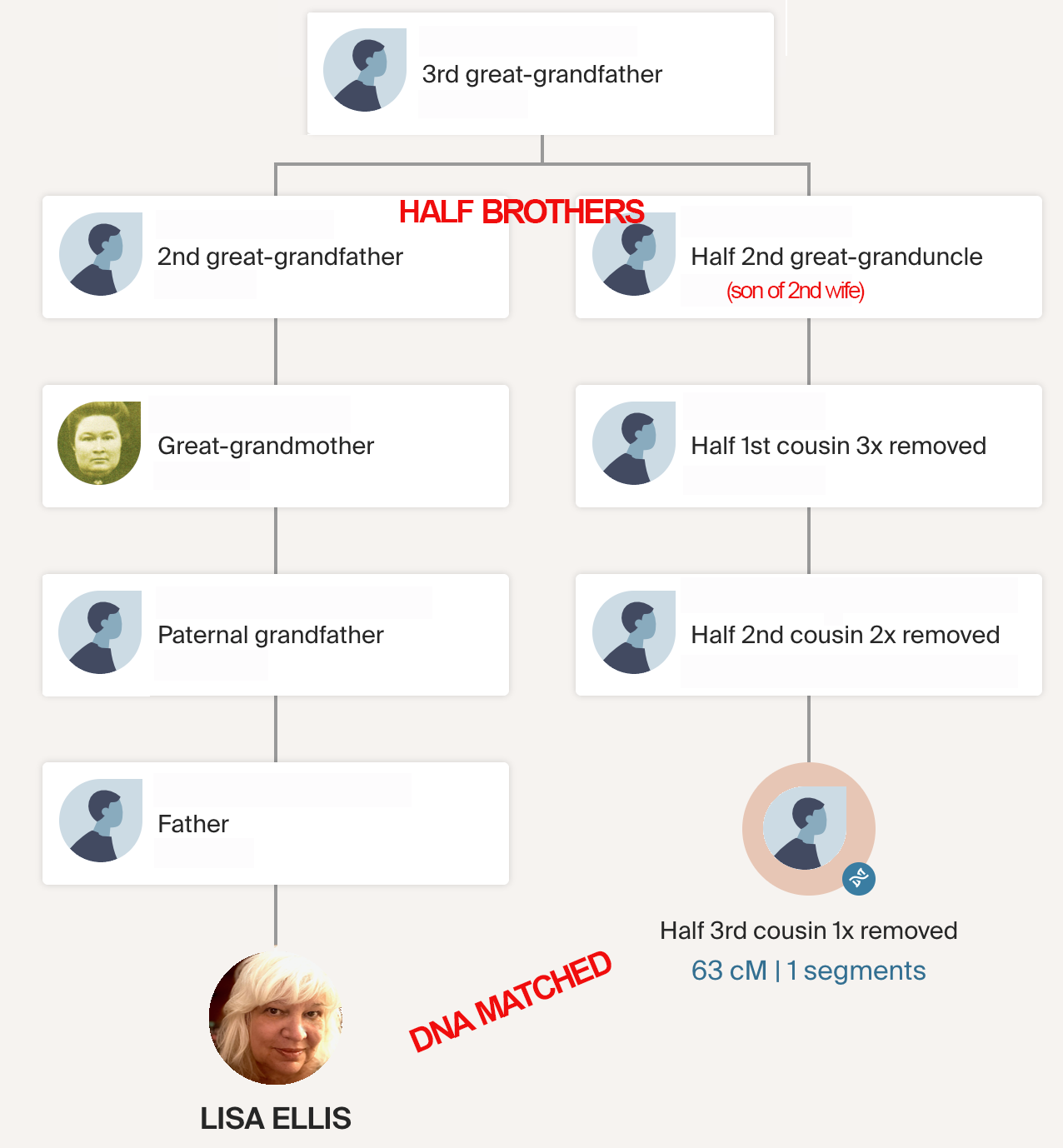
Long story short: I found her parents. The ones who had always been her birth parents, and not adoptive ones. Her white parents. I did this through being DNA-matched to a half third cousin once removed (63 cM, 1 segment) whose half second great-granduncle’s father is my third great-grandfather, and the grandfather of the woman in question. (I won’t be testing you on this.)
So where did those rumours come from? I can only speculate.
Facts: Her mother died when she was two years old, her father the following year.
There’s a note in our family files in my father’s handwriting from when he actually tried to solve this riddle himself more than 50 years ago. He went to Chandlerville, Illinois, county records and was told by an archivist named Barbara that she was “adopted age 4” in 1876. He made the assumption that she was adopted into a white family, rather than out to a different white family.
In the 1880 US census, she is listed with this second family as being their servant, yet her younger brother is with yet another family in a different county and listed as being in school. I’m not a psychologist, but it occurs to me that she was acting out in anger and to explain her lack of parents to mocking children, she may have embellished her heritage to make it more interesting and she carried this story through to her death.
I suppose the hand-woven American Indian basket that’s been passed down through generations to me wasn’t handmade by her either.
Sadly, my father died three years before DNA was first developed as a process of DNA profiling in 1984. He would have loved analysing centimorgans and getting the answer to this family rumour.
Whatever the outcome, the research it took was helpful to me understanding the use of cousins and DNA matches.
Have you solved any family mysteries through DNA?
Support Melksham News
Help us keep your community connected and informed.
Local news is under pressure more than ever. Choose a monthly subscription or a one-off donation to support independent reporting in Melksham.
Send us your news!
Help us keep your community connected and informed.
Do you have an interesting story you would like to share? Have you seen something you feel needs more attention? Get in touch with a reporter today!
✉️ Click here to get in touch with a reporter





I realised after it was published that I typo’ed my family arrival years. Oops, sorry! Not 1500s as was written, but rather early 1600s. I’m still researching but so far have found related passengers on the following ships: two Mayflowers (1620), a Fortune (1621), an Anne (1623), a Talbot (1629), an Elizabeth (1635), an unknown ship (1635), another unknown ship (1636), and an interesting transportation — the guy was Jacobite Scottish, and since he was on the losing side in the Battle of Dunbar, the King sent him to the colonies as a slave to work in the iron mill (1650). He bought land in Virginia in 1655 and the family joined him. The majority of my father’s side came from the midlands and my mother’s from the north of England.
You might also have noticed that the referred-to belt buckle on my great grandmother’s photo unfortunately got cropped off.