A column about days gone by in Melksham by local historian Lisa Ellis
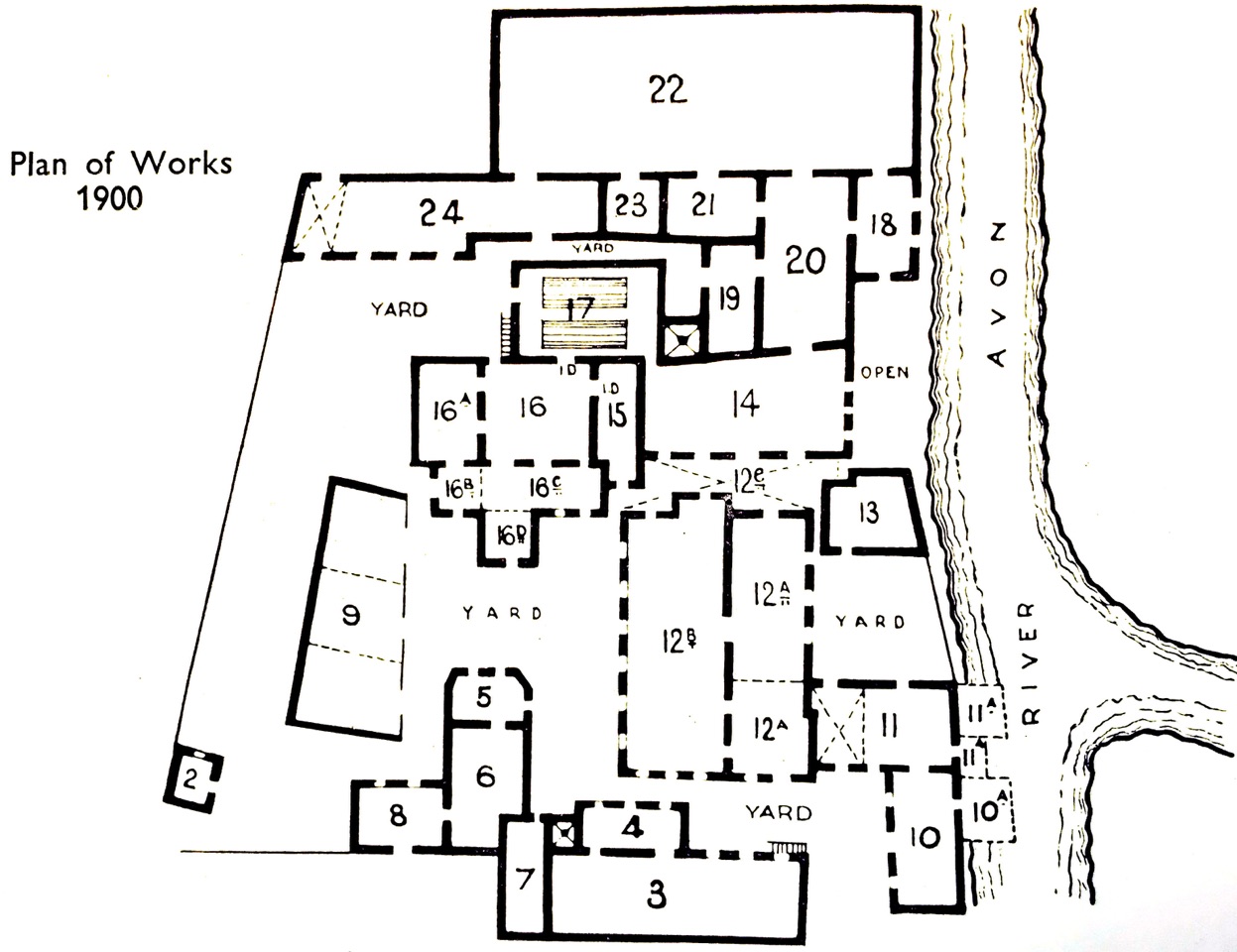
The Avon Rubber Layout in 1900
With the current demolition of the former Avon India Rubber Co Ltd factory site, it might be worth noting what the grounds first looked like, with the help of the former chairman.
In 1955, Robert Fleetwood Fuller recorded a history of the factory on the occasion of his 50th anniversary with the company.
In that booklet was a diagram showing the original layout of the premises when they moved into their new location on Bath Road in 1900.
His description:
“The entrance was adjoining the Flour Mill with the dwelling house of Mr W Higham, Work’s Foreman, just outside the gates. The house had previously been occupied by Mr Margetson (who had recently moved to Beechfield, Beanacre) and was probably originally built in the 15th century, as shown by the Mural painting found behind the 18th century panelling. It was seriously damaged during the Melksham riots of 1739, but restored by Henry Couldhurst whose initials, with the date of 1746, still appear on the water pipes.
“Inside the Works Gate, on the right, No 10, was the Laboratory with the Director’s room on the first floor above.
“No 11 was the Timekeeper’s Office below, and General Office above extending over the archway. Mr J Wyatt was Timekeeper and Warehouse man, and Mr Clatworthy in charge of the office upstairs.
“Goods for despatch were packed in No 12a, outside which was a crane for loading on to the Railway wagon. Nos 12a and 12b on the ground floor were the General Mechanical Moulding Departments with a number of small presses and Drop Heaters, etc. On the floor above was the Pneumatic Tyre Shop.
“No 11a on the first floor, which was hung out over the river, propped up on two iron bars, was utilised as Mr Fuller’s office (George Pargiter Fuller, R F Fuller’s father), and the adjoining one by Mr Charlie Margetson, who was assisting in the Prime Cost.
“No 13 was a stable and coach-house, which housed Mr Margetson’s pony and trap.
“Nos 5,6, 7 and 8 were let to the Protene Company, but as this space was now required they were given notice to quit in 1900. (Protene gave up their premises in 1901 that they had occupied since 1898.)
“No 9 was a single-storey building used for store of waste rubber, etc.
“No 3 known as the old Factory, with the date of 1801 on the weathercock above, was used amongst other things for the making of Flexible Connections for Railways (corridor trains were then a comparatively new thing) and Compound Stores were on the ground floor.
“No 14 was a five-storey building, the three upper floors being used for a Drying Room and there was also a Drying Room over the Boiler House (No 17), while on the first floor Mr Tom Davis was in charge of Compounds and Batch Weighing. On the ground floor of No 14 were three Mixing Machines driven by the Spencer Engine in No 15. This engine had been installed in the days of the Cloth Factory.
“No 16 was the Washing Shop, No 16c the Spreading Shop and No 16a Fitters’ Shop.
“No 20 contained the Calendars, driven by a curious old Donkey Engine in No 19.
“No 18 was a little room used by Mr W Sydee, Jr, for mat punching.
“No 22 was the Long Shop, the 60-ft Hose Heater being along the far side, a 12-ft by 4-ft press for the Sheeting, etc., and an Open Cure Heater, for curing Admiralty Sheeting, were the main items of plant in this Shop. Vacuum Pipes were also made here.
“There was an Open Cure Heater in No 24, and a number of Cushion Tyre Moulds in No 21, but beyond this Shop was a rough garden with a Summer House and Mr Margetson also kept a boat which came in useful during floods.”
Support Melksham News
Help us keep your community connected and informed.
Local news is under pressure more than ever. Choose a monthly subscription or a one-off donation to support independent reporting in Melksham.
Send us your news!
Help us keep your community connected and informed.
Do you have an interesting story you would like to share? Have you seen something you feel needs more attention? Get in touch with a reporter today!
✉️ Click here to get in touch with a reporter