A column about days gone by in Melksham by local historian Lisa Ellis
One’s scandal to another’s philanthropy
In the last issue, I mentioned a bequest made in the will of Mrs Ludlow Bruges that enabled the purchase of land and construction of a state-of-the-art hospital on Spa Road.
These funds came primarily through US stocks, investments and interest totalling around £198,000; today worth around £17.3M.
Although delighted, people were confused by her generosity. She’d moved to the Channel Islands from Seend and had never had any known links to Melksham Cottage Hospital nor any other Melksham charities. If you were to refer to the plaque pictured in the last issue, you would note a contribution of £100 in 1923 by Mr W Bruges. This was a bequest by William Bruges of Semington with no close tie to the Ludlow Bruges of Seend.
Perhaps her contribution may have had something to do with a notorious scandal in 1881. The hospital benefactor in question, Lisette Henrietta (Hamilton) Ludlow Bruges, was the wife of Richard Ludlow Bruges, Magistrate and Justice of the Peace. He was charged with writing, sending and publishing false, scandalous and defamatory libel about Lady Constance Gladys (Herbert), Countess of Lonsdale.
Gladys’s husband, Lord Lonsdale, had been out of the country for a short time and came home to find the letter concerned, addressed to him at the Turf Club, Piccadilly.
The handwriting on the envelope was identified by Alexander Cochrane, postmaster at Melksham. Cochrane claimed to have known Bruges from infancy and was acquainted with his handwriting. Bruges admitted to his handwriting but did not recall writing the letter.
In answer to his bail, Bruges appeared before Thomas Newman, the latter stating, “I know the defendant’s eldest brother to be a lunatic and that some years ago the defendant himself suffered from paralysis, and was thrown from a dogcart and twice injured, once in the head. I took the defendant home, and the next day he had no recollection of what occurred. There has been a great change in him of late years since the paralytic seizure, and his manners have been strange. I believe if he had been in his right senses he would not have written the letter.”
Several other witnesses to a change in Bruges’ behaviour since the dog cart accident appeared, one being MP for North Wilts, Walter Long, who stated, “I have noticed a marked change in the prisoner. At one time he was a hard drinker but now took large quantities of zoedone – seven or eight quarts a day.”
The evidence was read over and Bruges then had the opportunity to speak to defend himself, “I am bound to make a most ample apology to Lord Lonsdale. I was not in my right senses or I should not have written such a letter. I know neither Lord Lonsdale nor Lady Lonsdale. I had no malice, and no man in his senses would to go to his post office, borrow a sheet of paper, and write a letter like that produced. I believe I was suffering from the effects of zoedone.”
The letter itself was not revealed in court, as it was said to be too scandalous. Women were also led out of the courtroom before testimony was given due to the nature of the accusations made.
It should be noted that Lord Lonsdale died a few months later in February 1882 at the age of 26, suffering a few days’ congestion of the lungs. The title transferred to his brother as William and Gladys had no children. Accounts of his life were mixed, and if it not for no other link to this area, his fuller story would be a focus of Melksham’s scandals.
Richard Ludlow Bruges was stricken off the list of magistrates and had to pay a couple thousand in fees. He died in 1907. His wife survived him for almost 30 years; she died aged 77 in St Lawrence, Jersey. They had no children.
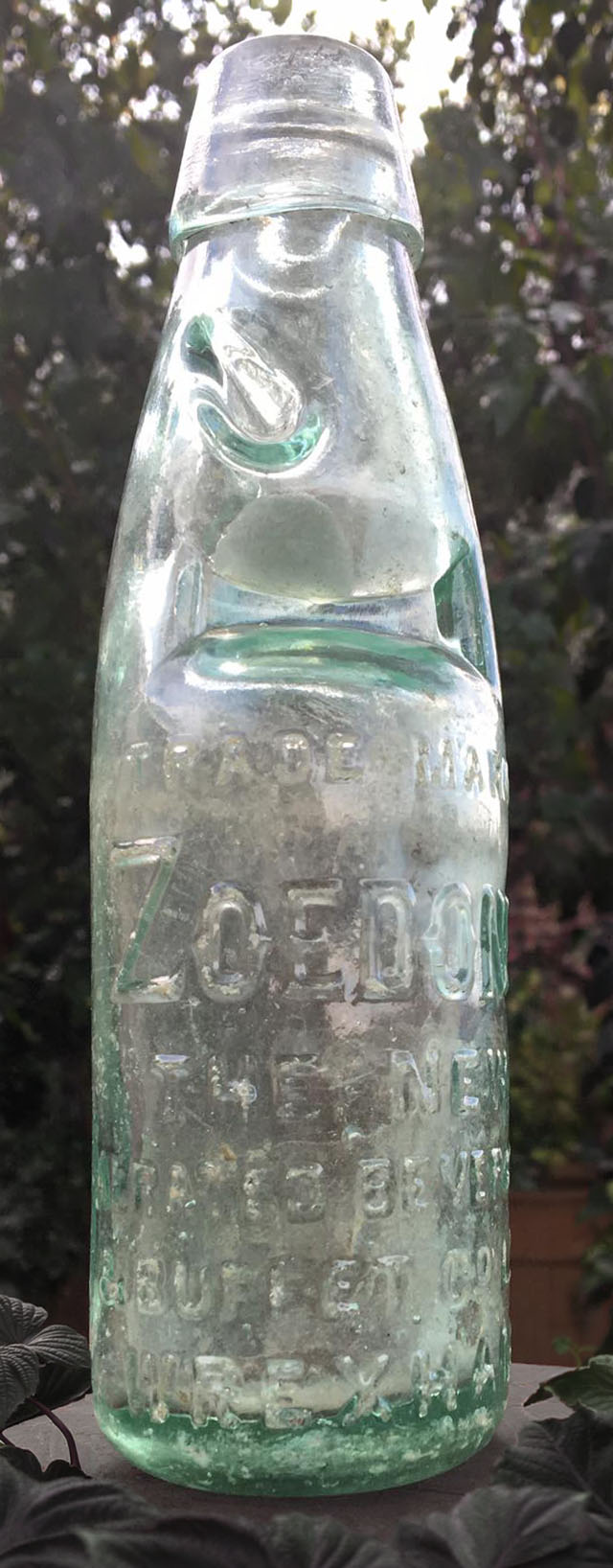
Illustration:
Zoedone was a popular non-alcoholic carbonated beverage, manufactured around the 1880s as part of the temperance movement and marketed as a healthy, refreshing alternative to alcohol. It was sold as a “nervine tonic” and contained phosphates and iron, and if you found an aged, full bottle, consuming it today would likely cause a severe stomachache due to spoilage but the original formula was not a poison.
The name and reference is not to be confused with what happened to a famous mare named Zoedone who won the 1883 Grand National. In 1885, she was the heavy favourite for the race but performed lethargically and fell. Racing historians and records have long noted that she was, in fact, maliciously injected with poison in the paddock shortly before the race began.
Support Local News
Help us keep your community connected and informed.
Local news is under pressure more than ever. For just £2 a month, you can support independent reporting that shares local stories, investigates the issues that affect you, and keeps residents up to date.
Choose a monthly subscription or a one-off donation. All donations will be reinvested into producing local journalism for Melksham.
Donate Now